India's renewable energy target is, by any historical standard, staggering: 500 gigawatts of non-fossil fuel electricity generation capacity by 2030. To locate that number in physical reality: India's entire installed power generation capacity from all sources—coal, gas, nuclear, hydro, solar, wind, everything—is currently roughly 430 GW. The 2030 target effectively demands that India construct more renewable energy capacity in approximately five years than the entirety of its existing power infrastructure accumulated over seven decades since independence. It is one of the most ambitious energy deployment targets any nation has ever declared, and it arrives at a moment when India simultaneously faces the world's fastest-growing energy demand, catastrophic air pollution in its major cities, an annual crude oil import bill exceeding $120 billion, and a climate crisis that threatens the agricultural livelihoods of hundreds of millions of its citizens.
Is this target achievable by 2030? Almost certainly not—the administrative, infrastructural, and financial obstacles are too formidable for the timeline. Is the directional trajectory correct, genuinely impressive, and globally significant? Absolutely, unequivocally yes. India is the world's third-largest energy consumer, and its energy demand is growing faster than any other major economy on Earth. How India chooses to meet that skyrocketing demand—with fossil fuels or with renewables—will materially, measurably alter the trajectory of global climate change. This is not abstract policy discussion. This is planetary math.
The Solar Miracle: Where India Has Already Won
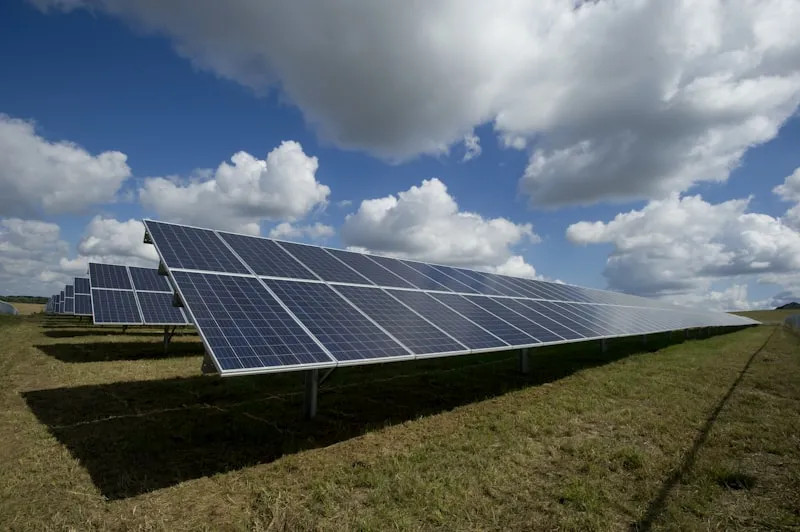
India's solar energy story is, without exaggeration, one of the most remarkable infrastructure scaling achievements of the 21st century. In 2010, India's total installed solar capacity was effectively zero—a rounding error, a footnote, a laboratory curiosity. By 2025, India had installed over 80 GW of solar capacity, making it the world's fourth-largest solar power producer. The growth curve is not linear; it is exponential, accelerating with each passing year as costs plummet, manufacturing scales, and institutional barriers are progressively demolished.
The cost trajectory is the single most compelling argument for India's renewable future. The price of solar electricity in Indian competitive auctions has crashed from approximately ₹17 per kilowatt-hour in 2010 to as low as ₹2-2.50 per kWh in recent bids. To appreciate the enormity of this number: new solar electricity in India is now cheaper than electricity from existing, already-built, fully-depreciated coal power plants. This is not a marginal cost advantage; it is a fundamental economic inversion that makes new renewable capacity more affordable than operating legacy fossil fuel infrastructure. The Bhadla Solar Park in Rajasthan's Thar Desert—one of the largest solar installations on Earth, covering roughly 14,000 acres of arid land—produces electricity at a cost that seemed physically impossible when the facility was first proposed.
India's solar manufacturing ambitions extend beyond deployment to production. The government's Production-Linked Incentive (PLI) scheme for solar photovoltaic module manufacturing—with an outlay of ₹24,000 crore—aims to build an integrated domestic solar manufacturing supply chain, from polysilicon ingots to finished modules, reducing India's current overwhelming dependence on Chinese solar panel imports. Adani Solar, Tata Power Solar, Vikram Solar, and Waaree Energies are scaling gigawatt-level manufacturing capacity. The strategic importance is clear: India cannot build its energy independence on a supply chain controlled by a geopolitical competitor.
Wind Power: The Mature Workhorse
India's wind energy sector, with approximately 45 GW of installed capacity concentrated in the wind-rich corridors of Tamil Nadu, Gujarat, Rajasthan, Karnataka, and Maharashtra, is the ecosystem's most mature renewable segment. Indian wind deployment began in the 1990s—decades before the solar boom—and the sector has accumulated substantial operational experience, a developed domestic manufacturing base (Suzlon Energy is one of the world's largest wind turbine manufacturers), and a trained workforce.
The next transformative frontier is offshore wind. India's 7,500-kilometer coastline, particularly the Gujarat and Tamil Nadu coasts, possesses wind resources that preliminary assessments indicate could support 70-100 GW of offshore wind capacity. Offshore wind turbines—massive structures anchored to the seabed or mounted on floating platforms—are more expensive than their onshore equivalents but produce significantly more consistent output because oceanic wind patterns are more stable and powerful than terrestrial ones. India's National Offshore Wind Energy Policy has identified initial development zones, and the first commercial offshore wind projects are expected to enter development within the next three to four years.
Green Hydrogen: India's Most Ambitious Bet
The National Green Hydrogen Mission—announced with a budget of ₹19,744 crore and a production target of 5 million metric tonnes annually by 2030—represents India's most strategically ambitious and technically uncertain energy initiative. Green hydrogen—produced by electrolyzing water using electricity generated from renewable sources—has the potential to decarbonize industrial processes that cannot be directly electrified: steel manufacturing (which accounts for roughly 7% of global CO2 emissions), cement production, fertilizer synthesis (the Haber-Bosch process that sustains global agriculture), and long-distance heavy transport.
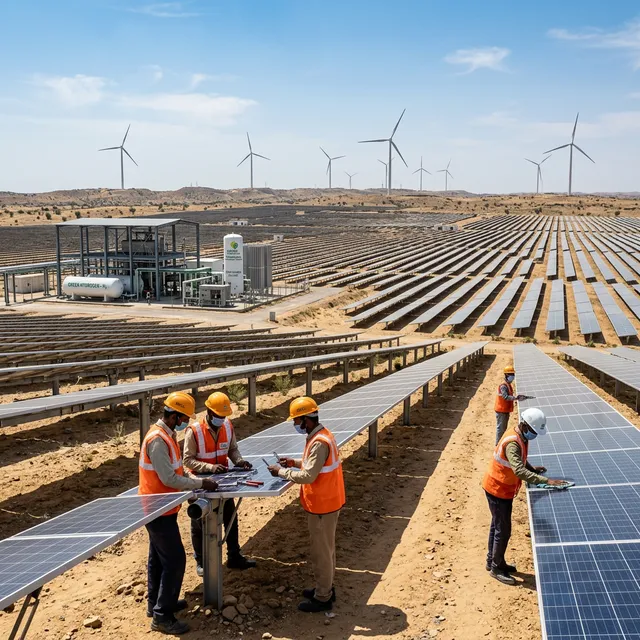
India's structural advantage in green hydrogen is its extraordinary solar resource. The economics of green hydrogen production are dominated by electricity costs—electrolysis consumes massive amounts of power. India's solar tariffs, the lowest in the world, create a potential cost advantage in green hydrogen production that could make India globally competitive. Companies including Reliance Industries, Adani Group, Indian Oil Corporation, and NTPC are making multi-billion-dollar green hydrogen investments. The Rann of Kutch and Rajasthan's desert regions are being evaluated for massive, integrated renewable-to-hydrogen production complexes.
The honest uncertainty: green hydrogen technology is commercially immature. Electrolyzer costs remain high. Storage and transportation infrastructure does not exist. The industrial processes that green hydrogen would replace—particularly in steel and cement—require fundamental engineering redesigns, not just fuel substitution. India's green hydrogen ambition is directionally correct and strategically essential, but the 2030 production target of 5 million tonnes is, by most independent assessments, extremely unlikely to be achieved on schedule. A more realistic timeline places meaningful commercial-scale green hydrogen production in India at 2032-2035.
The Inconvenient Truths: Why the Transition Is Harder Than Headlines Suggest
Grid Integration—The Physics Problem: Solar panels produce electricity when the sun shines—roughly 6-8 hours of peak production per day. Wind turbines produce electricity when wind blows—intermittently, unpredictably, and often asynchronously with demand patterns. India's electricity demand peaks in the evening hours (7-11 PM), precisely when solar output drops to zero. Integrating hundreds of gigawatts of variable, intermittent renewable generation into a national grid that must deliver stable, continuous power 24/7 is not merely an engineering challenge; it is a fundamental physics problem that requires massive investment in battery energy storage systems (BESS), pumped hydro storage, grid transmission infrastructure, and sophisticated demand-response management systems. India's current grid infrastructure—already stressed during peak summer demand, frequently suffering localized failures—must be comprehensively upgraded to handle the transition.
Land Acquisition—The Social Problem: Solar farms require approximately 5 acres of land per megawatt of installed capacity. Scaling solar to the 500 GW target would require roughly 2.5 million acres—an area approximately five times the size of Goa. Land acquisition in India is legally complex, politically sensitive, socially contentious, and administratively glacial. Agricultural communities resist converting productive farmland to energy installations. Tribal communities contest projects on ancestral lands. Environmental assessments reveal ecological sensitivities. The bureaucratic clearance process, even for willing sellers, can consume years. This is not a technical constraint; it is a deeply human, institutional constraint that no amount of engineering brilliance can circumvent.
Coal's Stubborn Persistence—The Economy Problem: Despite renewable energy's spectacular growth, India opened new coal mines and commissioned new coal power plants in 2024 and 2025. Coal provides roughly 70% of India's electricity generation. The coal economy directly employs millions of workers—miners, transport operators, power plant employees—in some of India's most economically vulnerable regions (Jharkhand, Chhattisgarh, Odisha). Coal provides domestic energy security (it is mined within India, unlike imported crude oil or natural gas). And coal-fired thermal power plants provide reliable, dispatchable baseload generation that renewable sources, without massive storage infrastructure, cannot yet fully replicate. The transition away from coal is happening, but it will be a multi-decade process driven as much by economics (renewables are now cheaper for new capacity) as by policy, and it must navigate the enormous social challenge of transitioning millions of coal-dependent livelihoods into alternative employment.
Frequently Asked Questions (FAQs)
Will India actually meet its 500 GW renewable energy target by 2030?
The consensus among energy analysts is that India will significantly miss the 2030 target but will make substantial progress. Current deployment trajectories and planned project pipelines suggest India will reach approximately 350-380 GW of non-fossil fuel capacity by 2030, which would still represent an extraordinary achievement—roughly doubling current renewable capacity in five years. The 500 GW milestone will likely be reached by 2033-2035. The target's value is directional and motivational—it drives policy, investment, and institutional urgency even if the exact number is not achieved on the exact date.
Can India completely eliminate coal power?
Not within any foreseeable timeline. Eliminating coal from India's energy mix requires three preconditions to be simultaneously met: sufficient renewable generation capacity, sufficient energy storage capacity to ensure grid reliability during non-generation periods, and a comprehensive economic transition plan for millions of coal-dependent workers and communities. None of these conditions will be fully met by 2030; all three are progressing gradually. A realistic assessment suggests coal's share of India's electricity mix will decline from approximately 70% to 40-50% by 2035, and further to 20-30% by 2045—a dramatic reduction but not an elimination. Some coal capacity will likely remain operational as strategic backup well into the 2050s.
Is nuclear energy part of India's clean energy plan?
Yes, but as a relatively small contributor. India operates 23 nuclear reactors with a total capacity of roughly 7.5 GW and has several additional reactors under construction, including the large Kudankulam facility. Nuclear power provides reliable, zero-carbon baseload generation, but its expansion faces significant constraints: extremely high capital costs (nuclear plants are the most expensive per-GW power generation facilities to build), long construction timelines (typically 8-12 years), public safety concerns, and limited domestic uranium supplies. India's three-stage nuclear power program—envisioning a future transition to thorium-based reactors, leveraging India's large thorium reserves—remains a long-term strategic vision rather than a near-term deployment reality. Nuclear will contribute meaningfully but modestly to India's energy transition, likely reaching 15-20 GW by 2035.

Comments (0)
Be the first to share your thoughts on this article.